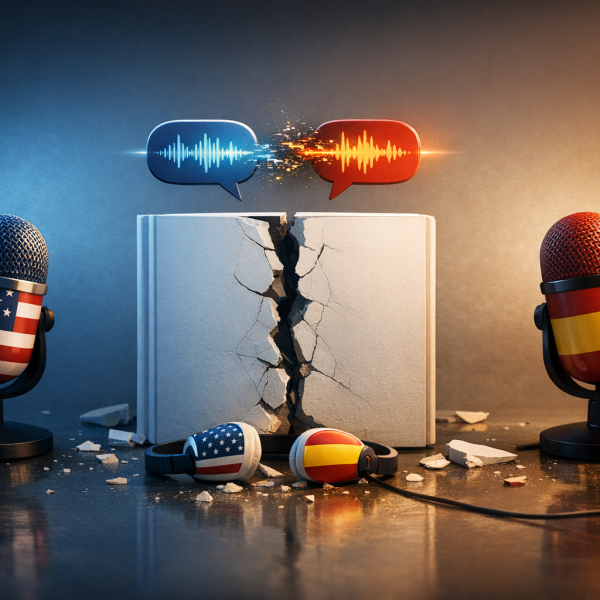
Translating spoken English into Spanish is no longer a futuristic concept. With AI-powered tools and instant apps, anyone can turn voice messages, meetings, or video content into Spanish in seconds. Yet, even with all this convenience, something often feels off. The words might be technically correct, but the intent, warmth, humor, or urgency sound flat, robotic, or even inappropriate. That missing element is tone, and getting it wrong can quietly damage trust, brand image, and communication effectiveness.
Main Research
1. Direct Word Substitution Ignores Emotional Context
Many voice translation tools rely heavily on word-for-word equivalents. This might work for simple sentences, but tone lives in the emotional context, not just the dictionary. In English, a casual “Could you help me with this?” may feel polite and soft. A literal Spanish version might sound too formal or oddly distant, depending on the phrasing and region. The emotional weight behind a phrase often changes across languages, and automated systems struggle to interpret and mirror that nuance.
2. Formal vs Informal “You” Is Not Just Grammar
Spanish forces you to constantly choose between “tú” and “usted,” and sometimes plural forms like “vosotros” or “ustedes.” This choice isn’t just grammatical; it signals closeness, respect, hierarchy, and cultural expectations. English uses a single “you,” leaving all those shades of meaning implicit. A machine that doesn’t understand your relationship with the audience will regularly misfire on these choices. It can make your customer support sound cold, your marketing sound pushy, or your instructions sound condescending. Professional translators learn to keep consistent levels of formality, whether they are working on English to Spanish projects or delivering a specialized language solution like a russian translation service.
Live work makes that choice starker, because there is no draft to revise before the listener hears it. Interpreters at PoliLingua work over the phone and by video as well as on site, and in those formats the formality decision gets made in the first few seconds from whatever the client has said about the audience. Passing on that context before the session starts is a small step that settles most of the register problems in advance.
3. Intonation Patterns Don’t Survive the Transfer
English often relies on rising and falling intonation to show doubt, excitement, irony, or emphasis. Spanish has its own melodic patterns that convey attitude and emotion. When an English sentence is converted into written Spanish and then read by a synthetic voice, the original melodic cues are usually lost. The resulting audio can sound monotonous, overly dramatic, or inappropriately cheerful in serious contexts. This mismatch becomes very noticeable in sales pitches, training videos, or public announcements where tone must guide attention and trust.
4. Cultural References Turn into Confusing Noise
Jokes, idioms, pop culture references, sports metaphors, and local sayings carry strong tonal signals. When someone says in English, “That’s a home run,” they are not talking about baseball equipment; they are expressing success and enthusiasm. If a tool translates it literally into Spanish, the listener might understand the words but miss the intended tone, or worse, find the phrase awkward and distracting. Effective voice translation needs cultural mediation, not just language conversion, to keep that emotional resonance intact.
5. Register and Style Shift with Audience Type
We don’t speak the same way to a close friend, a CEO, or a classroom full of students. Tone involves register: slang, technical jargon, polite forms, and levels of ceremony. English offers broad flexibility; you can blend casual language with business terms in a single sentence. Spanish tends to require clearer decisions about register and consistency. Automatic voice translation often fails to read the room and will mix overly casual with overly formal phrases, creating an unstable style that feels unprofessional and confusing to native Spanish listeners.
6. Regional Variants Add Another Layer of Tone
Spanish is not one uniform language. The Spanish of Mexico, Argentina, Spain, Colombia, and other regions differs in vocabulary, rhythm, and tone. Friendly phrasing in one country may sound distant or even rude in another. English-to-Spanish voice translation tools usually offer a generic “Spanish” or a small set of variants, but they rarely apply consistent regional tone throughout long content. For marketing, customer support, learning materials, and public communications, that inconsistency can make your message feel generic or out of touch.
7. Prosody and Pace Affect Perceived Attitude
Tone is not only in the choice of words but also in how quickly and smoothly they are spoken. Spanish tends to have a different natural rhythm than English. If a translation engine preserves English-style pauses, emphasis, and pacing, the Spanish audio may sound rushed, hesitant, or oddly chopped. Listeners unconsciously interpret these features as signs of confidence, respect, enthusiasm, or impatience. Without human intervention, voice translations can unintentionally add stress or urgency where none was intended.
Voice work into Spanish exposes how much of a script is performance rather than text. Rhythm and emphasis have to be rebuilt for the target language rather than carried across. That rebuilding is transcreation in practice, whatever the invoice happens to call it.
8. Literal Accuracy Can Mask Tonal Mistakes
Many users assume that if a translation is grammatically correct and uses the right vocabulary, the job is done. However, in spoken communication, literal accuracy is only half the story. A technically correct sentence may still carry the wrong emotional charge. For example, a customer apology that sounds stiff or formulaic in Spanish fails to restore trust, even if every word is “right.” This is why companies often invest in human review and adaptation of AI-generated scripts to make sure the tone truly matches their brand voice and audience expectations.
9. Safety and Sensitivity Require Human Judgment
Topics like health, finance, legal issues, and crisis communication demand more than literal translation. A small tonal misstep can create panic, downplay risk, or come across as uncaring. English may soften messages with phrases like “It might be a good idea to speak with a doctor,” while Spanish might need a different structure to sound both clear and reassuring. Automated systems lack the human sensitivity needed to calibrate seriousness, empathy, and clarity in high-stakes voice messages.
10. Brand Voice Needs Consistent Human Oversight
Every brand has a personality: friendly, authoritative, playful, sophisticated, or bold. That personality must survive the jump from English to Spanish, especially in voice. Generic audio generated by machines cannot fully capture the fine-tuned brand choices that copywriters and marketers build in English. Without professional translators and voice specialists adapting scripts, you risk sounding like a different company in each language, confusing customers and eroding brand loyalty over time.
Conclusion
Spoken communication is where tone matters most, and that is exactly where automated English to Spanish voice translation tends to fall short. From pronoun choices and cultural references to regional variations and pacing, each layer of nuance shapes how your message feels, not just what it says. Companies that treat voice translation as a strategic process rather than a quick technical fix gain clearer, warmer, and more trustworthy connections with Spanish-speaking audiences. The safest path is to combine smart tools with seasoned human linguists, ensuring that every translated voice truly sounds like you meant it.